A series of 5 interactive self-portraits that capture the emotional landscape of solitary living in between digital and physical space. Time gets distorted, and a room becomes an extension of the body.
The portraits react to a viewer coming closer, acknowledging her presence by a subtle movement. The connection never quite happens, as when we connect digitally.
Self-Portrait 01. Example of interaction
The series of interactive self-portraits was a result of my reflection on the space of missing. It appeared as a response to the isolation and peculiar mental states I was going through, being in a long-distance relationship during the lockdown. In this state, reality starts to resemble a stream of compressed pixels in a video call, where each participant performs for the other in a little rectangular window.
Each of the portraits in the series is a digital painting: slow videos on matte screens, installed in wooden frames, hiding microcomputers and sensors. They are not too big to convey an intimate relationship with a view one gets in a video call.
The long duration videos are quiet, almost nothing happens in them, but time passes. The videos are as blurred as was my image of self. It is always difficult to see yourself, but quarantine has made it even harder.
The visual aesthetic is inspired by old Dutch and Danish painting tradition and the video call’s low-quality image. The medium and the genre refer to a classical portrait and a long tradition of female self-portrait, often painted in a home environment, where women both lived and worked, quite as we do now. The pieces may fit in both home and public environments. The former is a place where they belong, and the latter is a place that allows connecting with someone outside of the character's room.
Each portrait has its own set of reactions. Some react with a glance or a change in their posture, while others hide. Responses also vary in intensity: from a slight movement of the hand to a turn of the body towards you. The interaction is randomized, and it's an algorithm that controls the movement. At times there might be no reaction at all. Both the viewer and the character in the portrait are neither totally free nor entirely dependant on each other.
The potential of action creates tension, although the action itself never fully happens, as it doesn't in the disembodied space of digital encounters. This loop of incompleteness is also reflected in the name "Almost There".
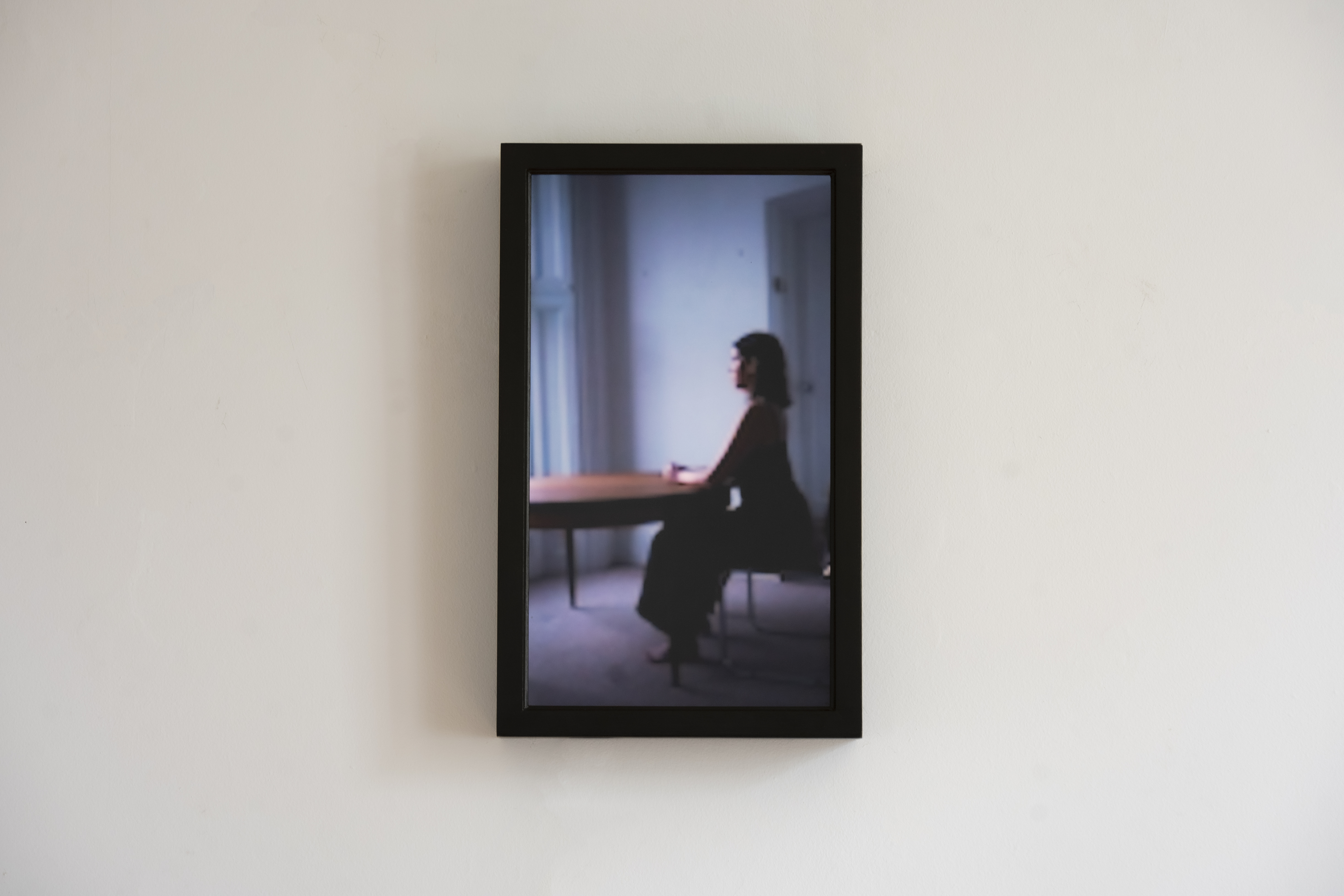
Almost There. Self-Portrait 01.
Interactive video installation
Screen, sensors, microprocessor
50×30×5 cm
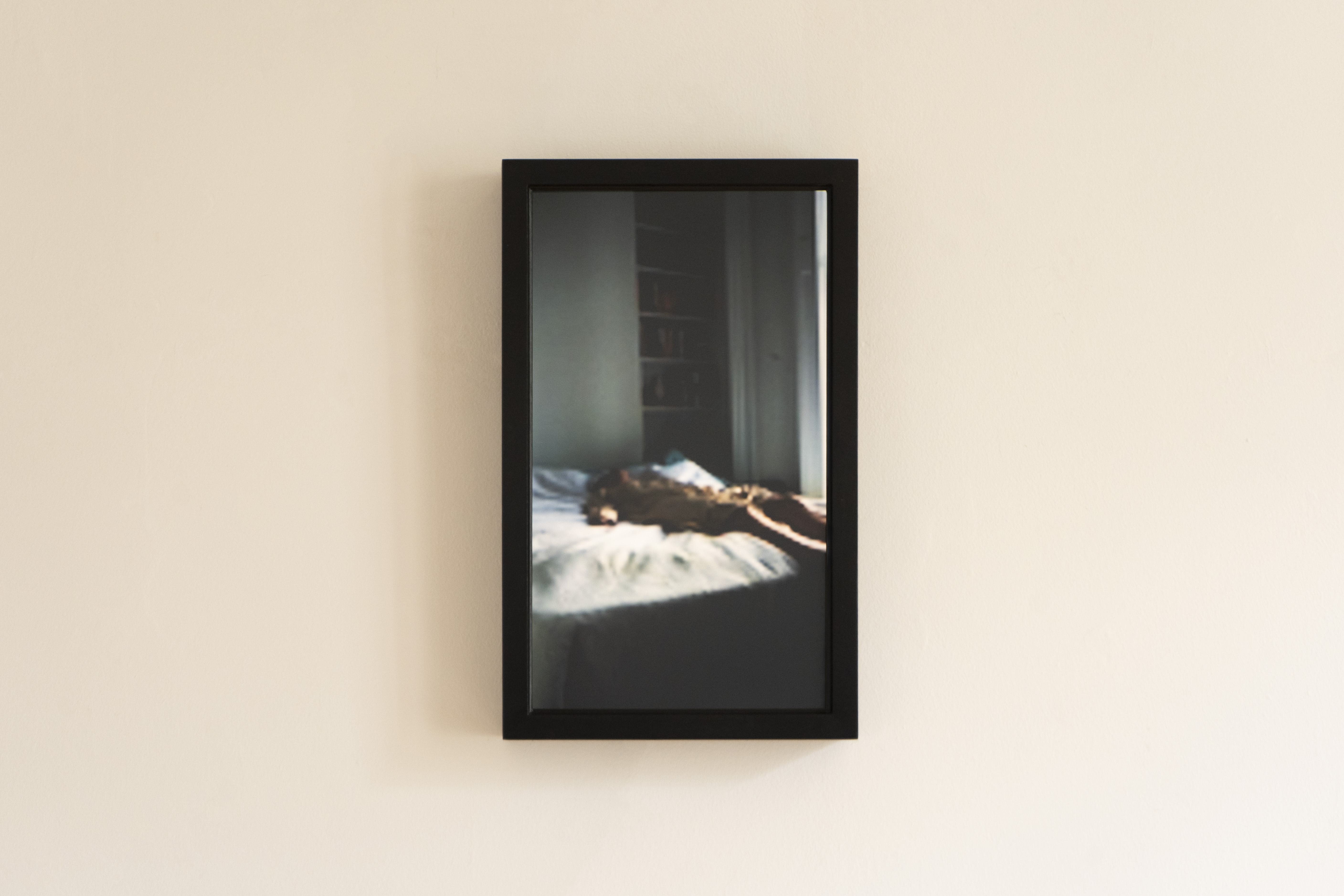
Almost There. Self-Portrait 02.
Interactive video installation
Screen, sensors, microprocessor
50×30×5 cm
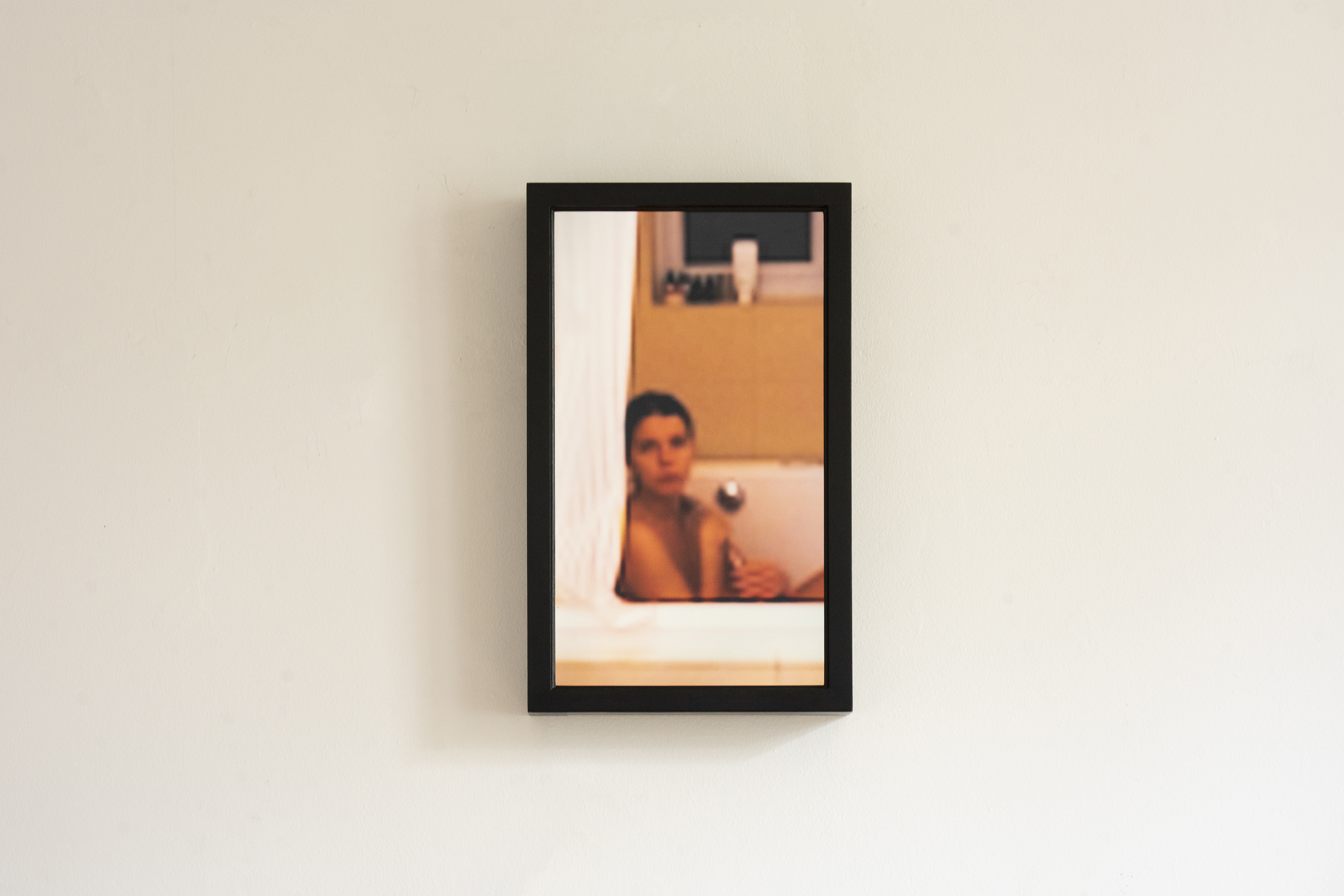
Almost There. Self-Portrait 02.
Interactive video installation
Screen, sensors, microprocessor
50×30×5 cm
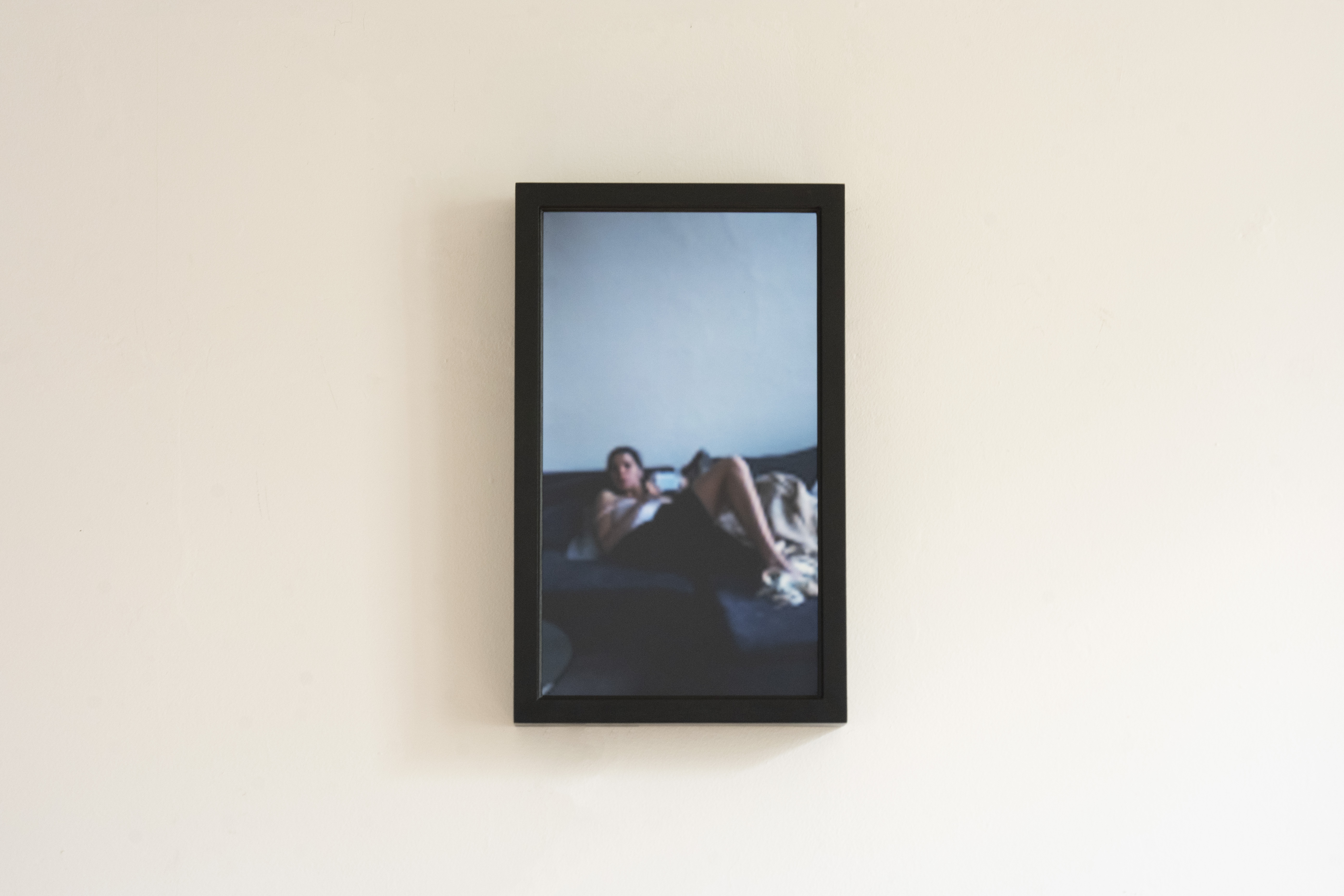
Almost There. Self-Portrait 04.
Interactive video installation
Screen, sensors, microprocessor
50×30×5 cm
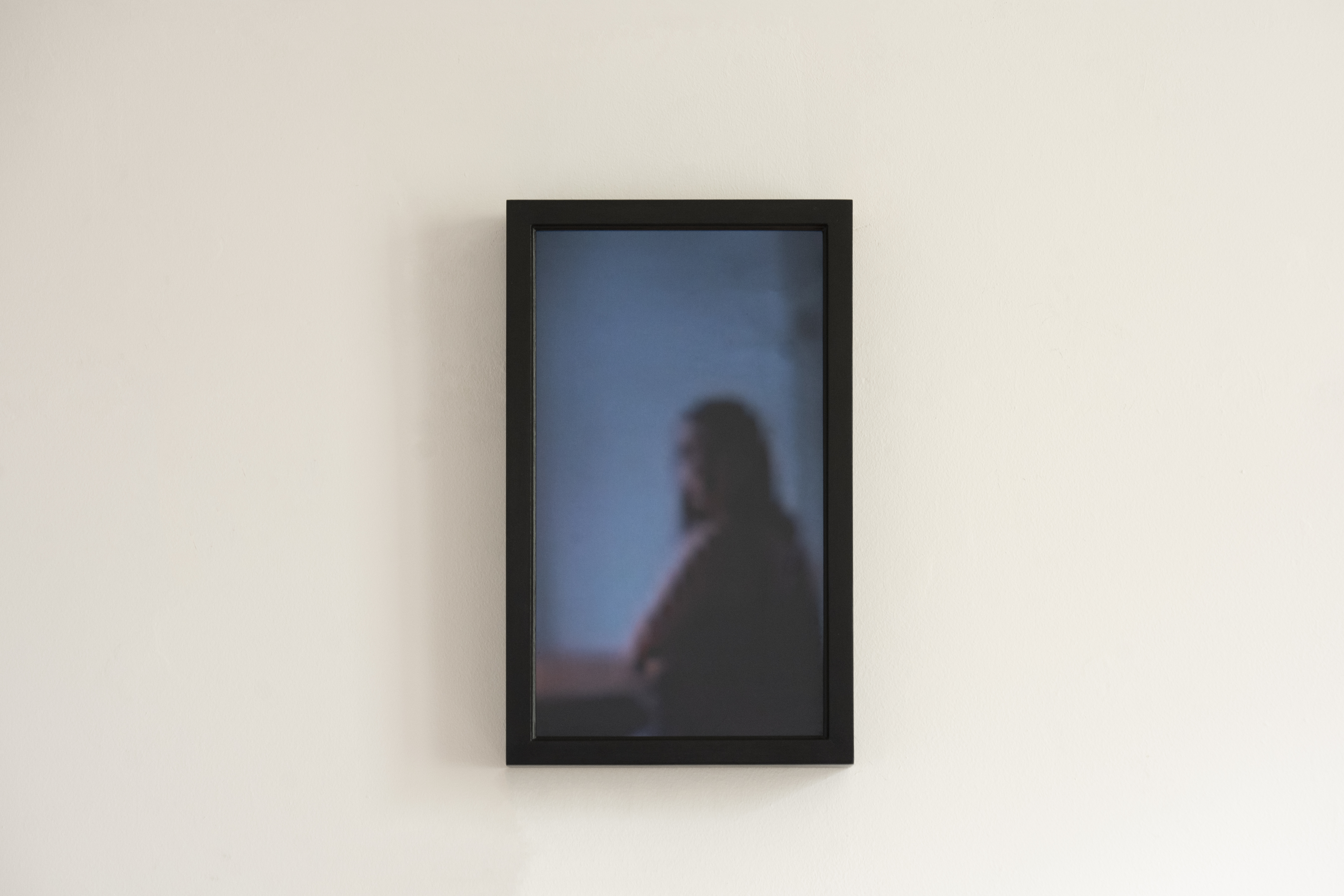
Almost There. Self-Portrait 05.
Interactive video installation
Screen, sensors, microprocessor
50×30×5 cm
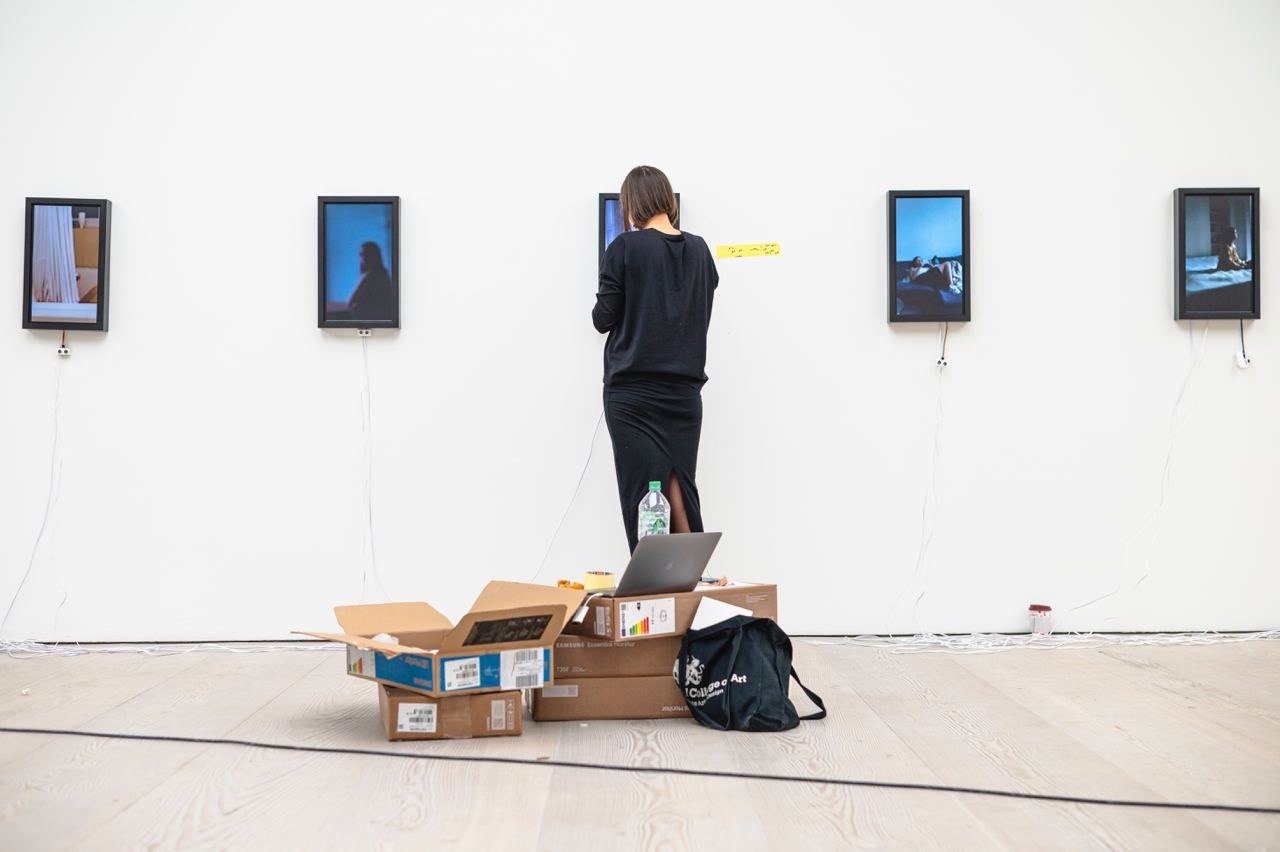
Behind the scenes at the installation of UK New Artist of the Year at Saatchi Gallery, 2022.